The Mass as Spirituality
The Mass as the relationship of God and man: ascending and descending, dancing with God, and what we carry up as our offering.
Awaiting review A priest has not yet reviewed this article. Read it alongside the Catechism paragraphs it cites, and take questions to your parish.
“Let me die to myself and live in you.”
— St Augustine of Hippo
“I pray that you will lead me, a sinner, to that banquet beyond all telling, where you, with your Son and the Holy Spirit, are the true light of your saints, fullness of joy, everlasting gladness and perfect happiness. Through the same Christ our Lord. Amen.”
— St Thomas Aquinas
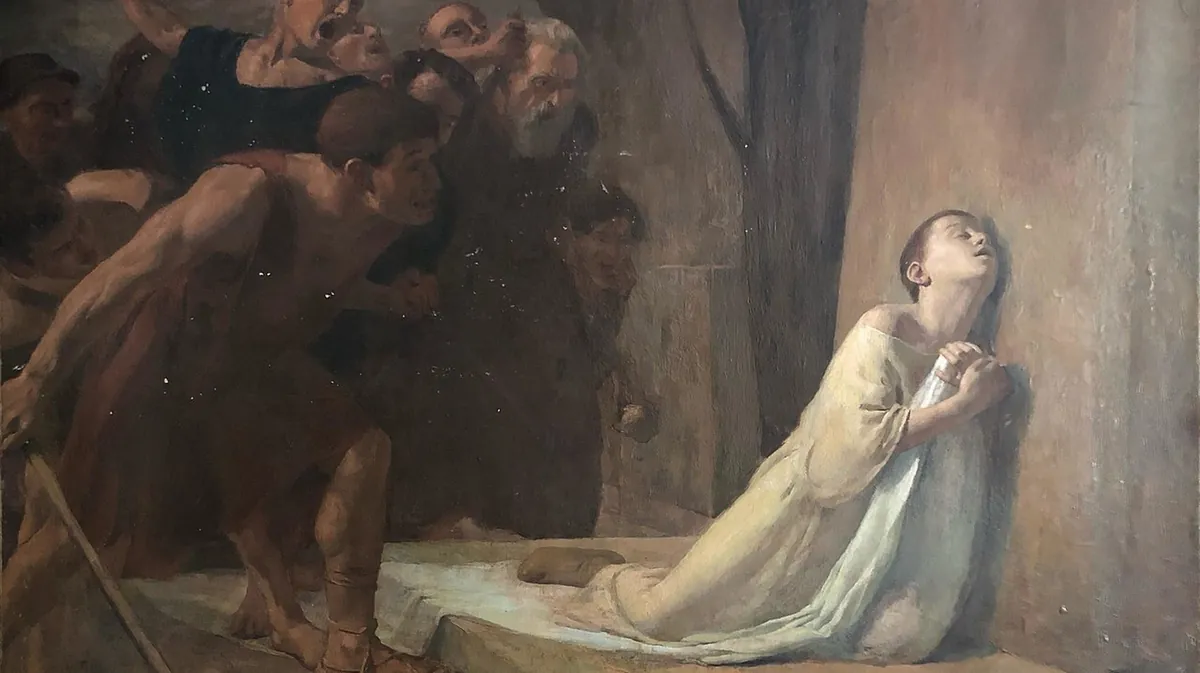
The Mass as the relationship of God and man
Dancing with God
(Jesus to Nathanael) “Truly, truly, I say to you, you will see heaven opened, and the angels of God ascending and descending upon the Son of man.”
— John 1:51
Two forms of the relationship of man and God in the Mass
- Ascending (anabatic): man lifts up his heart (sursum corda), and gives the Lord a fitting offering and praise.
- Descending (katabatic): Jesus Christ brings down gifts from heaven, the fruit of his work of salvation: sanctifying grace, and himself in the Eucharist.
Ascending
- Lamentations 3:41 “Let us lift up our hearts and hands to God in heaven”
- Man was created to “ascend”: to be united with God and share in his blessed life (CCC 1)
- In the Bible, God often does his work and builds relationships on mountains. Abraham on Mount Moriah, Moses on Mount Sinai, Elijah on Mount Carmel and Horeb, the Lord Jesus on Mount Tabor, on Golgotha, and on the Mount of Olives.
What do we carry up?
- We are asked to make an offering to the Lord, as a matter of justice, just as a child has duties towards its parents.
- The quality of an offering can be judged by how good the thing offered is. For example, a child who shows good school marks gives a good offering to its parents.
What is good for man
- St Thomas Aquinas understood the goods of man from Aristotle’s Nicomachean Ethics (S.T. I-II, Q.2). These are the kinds of good, starting from the lowest:
- External goods: things outside a person that improve the quality of life.
- Wealth or possessions (money, property)
- Social status (honour, reputation)
- Family and friendship (social support)
- Goods of the body: physical condition and health
- Bodily health
- Strength and endurance
- A good appearance
- Pleasures of the senses (good food, physical comfort)
- Goods of the soul: health of soul, in thought and deed
- Intellectual virtues: wisdom and understanding
- Moral virtues: courage, justice, temperance
- Self-control and harmony of soul
Offerings to God
- Blessed Bishop Fulton Sheen said that the Mass is only boring when we come bringing nothing.
- In the Liturgy of the Eucharist, the prayers of the faithful are offered so as to be united with the sacrifice of Christ, so that the small offerings we give become worthy of God.
- What we offer are the good things we have. But sometimes all we have is what is bad: addictions, sin. Offer that to God too. If he could create the universe out of nothing, he can create good out of the bad that you let go of at Mass.
- Give these things to God:
- External offerings (good)
- Wealth: money at the collection
- Social status: letting go of worldly identities (teacher & student, boss & employee, father / mother & child) and putting on a spiritual identity (sons and daughters of God).
- Family and friendship: inviting them to church
- Offerings of the body (better)
- Fasting and abstinence (especially from addictions, such as smoking)
- Dressing modestly, out of respect for the body
- Sickness and bodily suffering
- The soul (best)
- Obedience to the doctrine and dogma God has laid down through his Church, one, holy, catholic and apostolic. Especially on moral questions (abortion, contraception, corruption, etc.)
- Mental illness: anxiety, depression, sadness, etc.