The Mass as Biblical Prayer
A New Testament musical drama. The shape of the Mass from the road to Emmaus (Luke 24) and the praise and worship of heaven in Revelation.
Awaiting review A priest has not yet reviewed this article. Read it alongside the Catechism paragraphs it cites, and take questions to your parish.
A New Testament musical drama
“Every liturgical action is by its very nature steeped in sacred Scripture.”
— Pope Benedict XVI, Verbum Domini
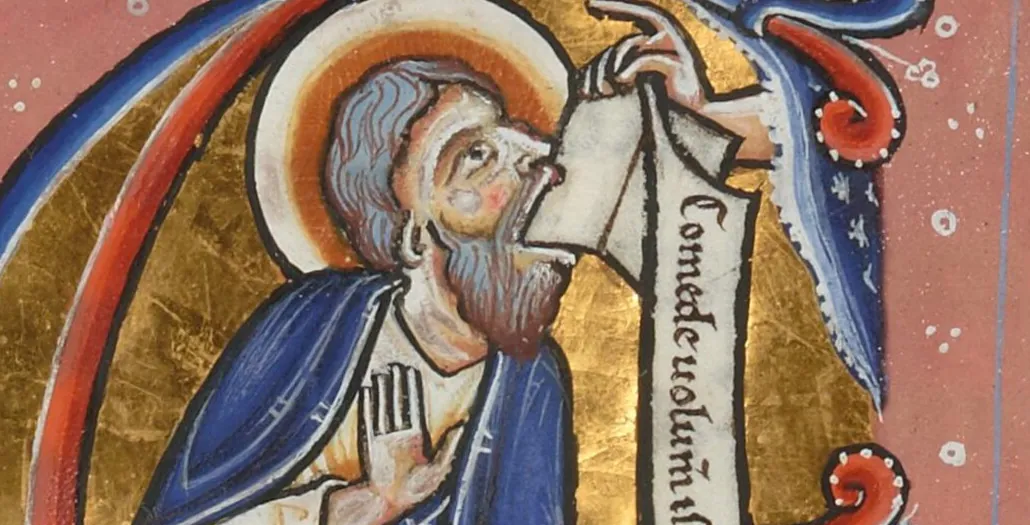
“A faith-filled understanding of sacred Scripture must always refer back to the liturgy, in which the word of God is celebrated as a timely and living word.”
— Pope Benedict XVI, Verbum Domini
Q: Where does the structure of the Catholic Mass come from? Human tradition?
- Praise & Worship in the New Testament is coloured by two cores of the New Testament itself:
- The victory of Christ
- Luke 24 → The road to Emmaus: how Jesus revealed himself to his disciples after his victory.
- The Book of Revelation → 3 themes that form the pattern of Jesus’ victory after his resurrection, given in union with all his disciples.
- The history of Christ’s victory
- The 3 themes of Revelation throughout salvation history, from the Old Testament to the New: Adam, Noah, Abraham, Moses, Joshua, King David, King Hezekiah, King Solomon, the prophet Isaiah, Zechariah and Malachi.*
- Covenant: how God, through history, made his promises to humanity in the Bible.
- Sacrifice: how sacrifice became the most important prayer in the Bible, and in worship after the resurrection of Jesus.
- The Our Father (Matthew 6:9-13) → how the prayer Jesus himself taught becomes real, as real as can be.
- Direct quotations from the Bible
* Before John the Baptist
Let us read Scripture together
If you are sceptical of the author, the author invites you to open Scripture as well while reading this book.
Let us learn together, so that the name of the Lord may be glorified more and more.
Luke 24: The road to Emmaus
- The road to Emmaus is a story after the resurrection of Jesus, in the last chapter of Luke’s Gospel (24:13-35)
- Two of Jesus’ disciples are walking to Emmaus.
- Jesus comes and asks them several things, and the disciples answer.
- This is the Introductory Rites of the Mass, where the priest, in the person of Christ, comes and speaks back and forth with the people.
- Then, “beginning with Moses and all the prophets, he interpreted to them in all the scriptures the things concerning himself.” (Luke 24:27)
- This is the Liturgy of the Word, where we take in Jesus, the Word of God, in the form of readings.
- As in the verse, the readings at Mass begin with the Old Testament and the letters of the apostles, which contain Jesus Christ “hidden”.
- The high point of the Liturgy of the Word is the reading of the Gospel, because the Lord himself speaks, “showing” himself without hiding.
- Then Jesus and his disciples eat together. At that moment Jesus “took the bread and blessed, and broke it, and gave it to them. And their eyes were opened and they recognized him” (Luke 24:30-31)
- This is the structure of the Liturgy of the Eucharist, where we take in Jesus, the Word of God, directly in the Eucharist, which is himself.
- The Liturgy of the Eucharist is the summit of the Mass, because there the Gospel we have just heard becomes real in our lives at that very moment.
- People do not fall in love with a theory, but with a face and a real form. The Eucharist is God’s message that Love itself refuses a long-distance relationship.
The Mass as stages of a relationship with God
- The Mass maps our journey towards union with God himself.
- At the start of the road to Emmaus, the disciples are sad and do not recognise Jesus.
- Symbolically, the start of the road to Emmaus stands for man, the beloved, who does not know how much God loves him: many thoughts and many words, but ending powerless, because he is shouting into the abyss of a heart of infinite depth.
- After Jesus speaks to the disciples through Scripture, their hearts burn within them.
- Symbolically, the beloved (man) receives an answer from the direction he was shouting: Jesus revealing himself through a voice. From here the beloved learns to hope that there is an ear that hears his love. Yet because human hope is so often disappointed, he still doubts, and questions begin to rise in his head: how far does my love go? Has he been listening all this time and staying silent? Is he sincere?
- Jesus, who is Love, “appeared to be going further.” How God longs to hear the voice of his beloved calling him.
- After Jesus breaks the bread, “their eyes were opened and they recognized him.”
- Symbolically, the beloved’s doubts vanish in an instant, because the one he loves is in front of him, to “taste and see” (Psalm 34:8). Here Jesus says “Chew me” (John 6:54)*, “Abide in me, and I in you.” (John 15:4). And of course the beloved says: “I found him whom my soul loves” (Song of Songs 3:4)
* Jesus uses the word trōgōn (τρώγων), chewing
The Book of Revelation: the praise and worship of heaven
Q: Why the Book of Revelation? Why not the letters of the apostles or the Gospels?
- Of course, in every book of the New Testament we can find “the victory of Christ”
- Many things and words in the Catholic liturgy are taken from the letters of the apostles and the Gospels
- The Book of Revelation is the Lord’s message, in the form of a vision to the apostle John, about how Christ’s victory is realised, in that time and in the time to come.
- That is why Revelation has more information about praise and worship, in more detail.
- The liturgical explanation of Revelation is also closely linked to the letters of the apostles and the Gospels (especially John’s Gospel)
The four (two) senses of Scripture
- In reading the Bible, every story has 4 senses*:
- Literal
- Allegorical: the link from the Old Testament → the New.
- Moral: the link to the practice of Christian life.
- Anagogical: the link to heaven.
- They can be simplified into 2 principles:
- Literal
- Spiritual (symbolic)
* CCC 115, Summa Theologiae Prima Pars, Q.1 A.10
Literally
Literally, the Catholic liturgy mirrors the things, objects and events of the Book of Revelation in the following verses:
| Liturgy | Revelation | Liturgy | Revelation |
|---|---|---|---|
| Sunday | 1:10 | Lamb of God | 5:6 |
| Priest | 4:4 / 11:15 / 14:3 / 19:4 | Confession of the Virgin Mary | 12:1-6,13-17 |
| Priestly vestments | 1:13 / 4:4 / 6:11 / 7:9 / 15:6 / 19:13-14 | Intercession of angels and saints | 5:8 / 6:1-10 / 8:3-4 |
| Celibacy | 14:4 | Antiphons (short chants) | 4:8-11 / 5:9-14 / 7:10-12 / 18:1-8 |
| Lampstands | 1:12 / 2:5 | Priesthood of all the faithful at Mass | 1:6 / 20:6 |
| Penance | 2 / 3 | Catholic / universal | 7:9 |
| Incense | 5:8 / 8:3-5 | Contemplation in silence | 8:1 |
| The Bible | 5:1 | The supper of the Lamb | 19:9,17 |
| The Eucharist | 2:17 | Alleluia | 19:1,3,4,6 |
| Chalice | 15:7 / 16 / 21:9 | Lifting up hearts to the Lord | 11:12 |
| Sign of the cross | 7:3 / 14:1 / 22:4 | Holy, holy, holy | 4:8 |
| Gloria | 15:3-4 | Amen | 19:4 / 22:21 |
Symbolically
Symbolically, the Catholic liturgy mirrors 3 great themes of the Book of Revelation:
Epiphany / The appearing of the King
- Revelation 19:11-16 → Jesus Christ (the Lamb of God) appears as King of kings and Lord of lords.
- Revelation 1:7 → “Behold, he is coming with the clouds, and every eye will see him”
- Revelation 5:6 → “a Lamb standing”
- Revelation 14:1 → “Then I looked, and lo, ... the Lamb...”
Royal Entry / The great procession
- Revelation 19:14 → “And the armies of heaven, arrayed in fine linen, white and pure, followed him on white horses.”
- Revelation 19:1 → the mighty voice of a great multitude in heaven: “Hallelujah!”
- Revelation 7:9-10 → people from every nation and tongue crying out
- Revelation 14:1-5 → God’s 144,000 chosen ones singing before the Lamb
The wedding feast / The great banquet
- Revelation 19:7-9 → “the marriage of the Lamb has come”, “Blessed are those who are invited to the marriage supper of the Lamb”
- Revelation 19:17-19 → God’s supper for the birds
- Revelation 21:2-9 → “the new Jerusalem, coming down out of heaven from God, prepared as a bride adorned”
- Revelation 22:17 → “The Spirit and the Bride say...”
The 3 great themes of Revelation above have 2 qualities
- Royal
- Sacrificial
From these 3 great themes, the Catholic Church shaped a worship (praise & worship) fit for God
- Epiphany / The appearing of the King
- Jesus appears 3 times in the Mass
- First, in the Introductory Rites. Jesus is present in the person of the priest and the ministers
- Second, in the Liturgy of the Word. Jesus is present in the words of the Gospel.
- Third, in the Liturgy of the Eucharist: Jesus is present as the sacrifice, his Body and Blood
- Royal Entry / The great procession / Adoration
- Introductory Rites: the people sing the entrance song, the priest incenses the altar.
- Liturgy of the Word: the people sing “Alleluia” as the priest carries the Gospel from the altar to the ambo, and incenses the book.
- Liturgy of the Eucharist: the people sing “Holy, Holy, Holy Lord”, kneel, and pray the “Our Father”
- The wedding feast / The great banquet
- Introductory Rites: the “Gloria” invites us to be present in heaven, like the angels who sang it
- Liturgy of the Word: the people “eat” and are united with the Lord Jesus Christ in thought
- Liturgy of the Eucharist: the people “eat” and are united with the Lord Jesus Christ in deed